Halter's AI Cattle Collars Revolutionize Farming, Achieve Unicorn Status with $2 Billion Valuation
April 4, 2026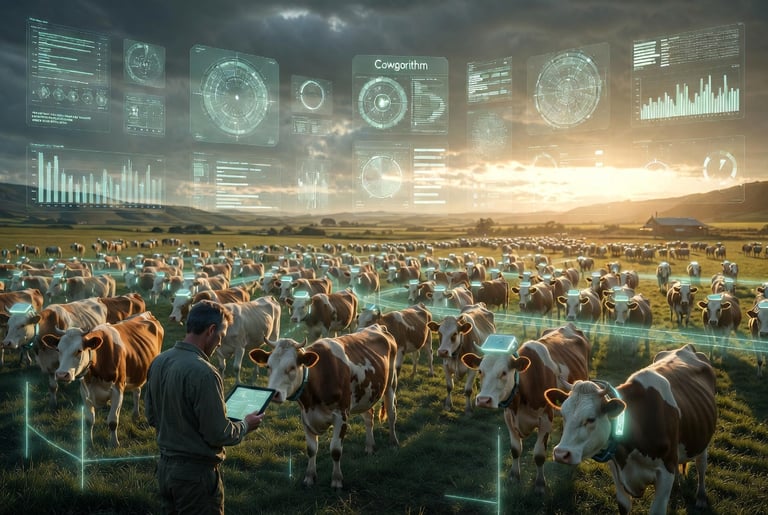

Halter sells solar-powered, GPS-enabled AI cattle collars that create virtual boundaries and aim to replace fences, dogs, and much manual labor with a system called Cowgorithm.
The system combines a solar-powered collar, low-frequency towers, and a smartphone app so farmers can set virtual fences, monitor herd movements from home, and collect behavioral data for health, fertility, and sickness monitoring.
Even as agtech funding tightens, Halter’s rapid growth and high valuation stand out in the sector.
The company was founded in 2016 by Craig Piggott, a Waikato dairy farmer, with early backing from Peter Beck, and now employs about 350 people.
Halter pursues a strong ROI focus and global expansion beyond the U.S., targeting South America and Europe to tap a global market of roughly one billion cattle.
CEO Craig Piggott says the technology can boost land productivity by up to 20%, with some farmers seeing output nearly double due to optimized grazing rather than labor savings alone.
Peter Thiel’s Founders Fund involvement has sparked speculation about privacy and surveillance; there is no direct Palantir partnership, and Thiel’s stake is via Founders Fund.
Halter has scaled to over a million cattle across 2,000+ farms in New Zealand, Australia, and the U.S., continually iterating hardware (five generations) and software with weekly updates.
The article emphasizes Halter’s scale and the long runway for adoption in global agriculture, highlighting the potential productivity gains for ranchers.
Founders Fund leads a heavily oversubscribed funding round for Halter, valuing the New Zealand startup at over $2 billion and potentially doubling its valuation in under a year.
The Series E round, including a $220 million investment, underscores Halter’s move to a unicorn status in agtech.
Overall, Halter is framed as a unicorn in a challenging agtech market, signaling a transformative shift through AI-driven cattle management.
Summary based on 2 sources