Artemis II Crew to Reveal Moon's Hidden Far Side in Historic April Flyby
April 4, 2026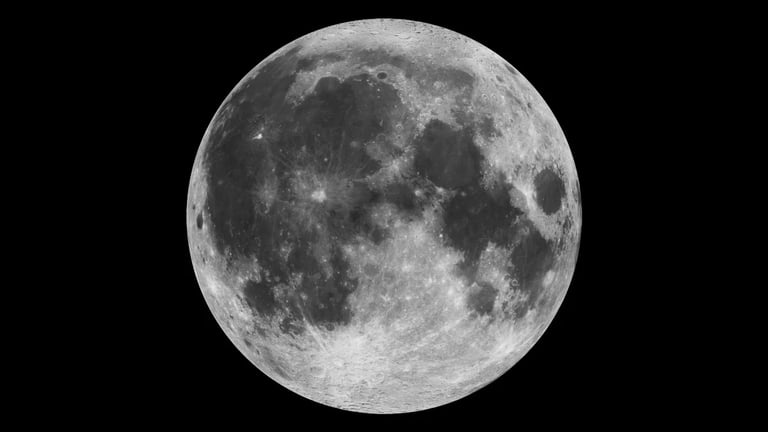

Researchers will look for subtle color and brightness variations and how changing sunlight angles affect perception of topography, adding a human-observed dimension to high-resolution imagery from orbit.
NASA scientists at Johnson Space Center and Mission Control will monitor the observations, aided by a science console introduced since the Apollo era.
Predictions are being adjusted for Orion’s trajectory with only about 20% sunlight on the far side, shaping what can be observed directly by crew.”
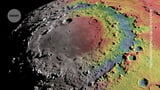
The Orientale basin is a primary target due to its size and significance for cratering history, with its full exposure not yet captured by humans in sunlight.
Scientists aim to infer geological processes and recent activity by observing color, brightness, and surface details from about 4,000 miles (6,000 kilometers) altitude.
For the first time since 1972, astronauts will directly observe the Orientale basin and other far-side features up close, providing new context for lunar geology.
In addition to Orientale, other craters such as Ohm and Pierazzo will be illuminated and observed, offering their first sunlight-based, human-viewed observations.
The piece underscores the value of human vision in science observations and notes ongoing support from scientists and subscription-based science journalism to fund continued coverage.
Astronauts will look for real-time impact flashes and will follow prompts and training to ensure precise, reportable observations.
Artemis II will execute a six-hour fly-by of the Moon’s far side on April 6, marking the first human visit since 1972 and enabling direct observation of previously unseen far-side features from a manned vantage point.
During the Orion orbit, the crew will conduct a six-hour observation window around the Moon’s far side as they loop past it.
The crew—Reid Wiseman, Victor Glover, Christina Koch, and Jeremy Hansen—will follow a detailed scientific target list prepared from satellite and Apollo-era data.
Summary based on 2 sources
Get a daily email with more Science stories
Sources
Nature • Apr 4, 2026
What Artemis II’s astronauts will look for on the Moon’s far side
Scientific American • Apr 4, 2026
What will NASA’s Artemis II astronauts see on the moon?