New Cellular Atlas Unveils Why Some Obese Individuals Stay Metabolically Healthy
February 5, 2025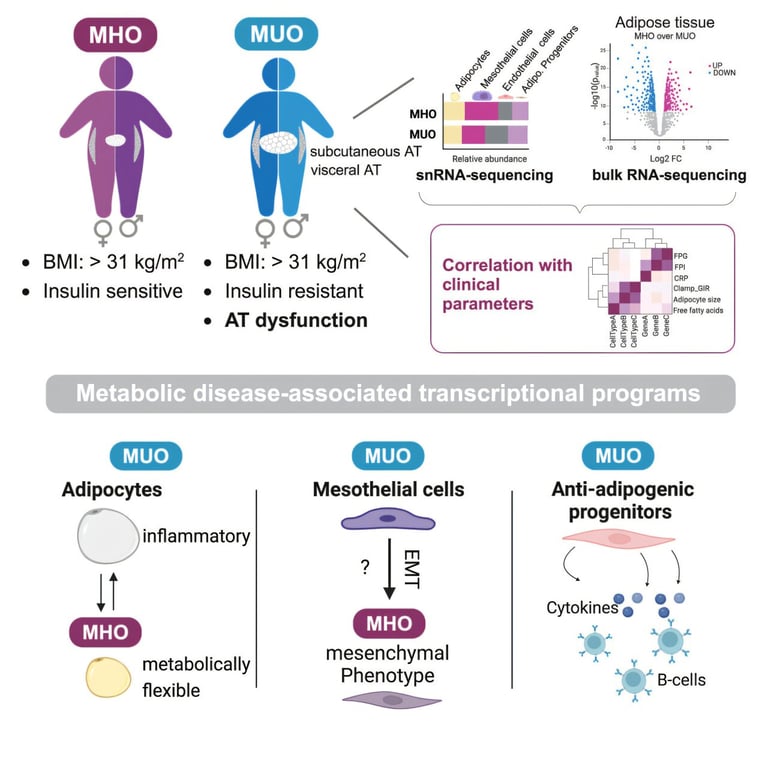

Researchers from Zurich and Leipzig have developed a new atlas of cellular changes in fat tissue to explore why some obese individuals remain healthy while others develop metabolic diseases.
Utilizing the Leipzig Obesity Biobank, the research involved biopsies from obese patients who consented to tissue sample collection during elective surgeries.
The researchers emphasized that adipose tissue is composed of diverse cell types, with adipocytes (fat cells) being outnumbered by immune cells, blood vessel-forming cells, and precursor cells.
The study highlights that while obesity is on the rise globally and linked to health issues, not all individuals with obesity experience these health problems.
The study aims to identify new biomarkers that could indicate the risk of developing metabolic diseases, enhancing treatment protocols for affected individuals.
Isabel Reinisch, a postdoc involved in the study, noted that immune responses triggered by certain substances in visceral fat may contribute to the development of metabolic diseases.
The study revealed significant sex-based differences in progenitor cells present in the visceral fat of women, potentially explaining variations in metabolic disease susceptibility between genders.
Healthy obese individuals exhibited a higher proportion of flexible mesothelial cells in their visceral fat, suggesting a role in tissue expansion and metabolic health.
Current efforts are focused on discovering new markers for metabolic disease risk, which could improve treatment strategies, including targeting patients needing appetite suppression and insulin-promoting drugs.
Significant functional changes were observed in the visceral adipose tissue of individuals with metabolic diseases, including decreased fat burning and increased production of immune response molecules.
The study analyzed adipose tissue from 70 volunteers, focusing on gene activity in both subcutaneous and visceral fat types, which are linked to different health outcomes.
This atlas serves as a foundational resource for future research, with its data made publicly available through a web app for other scientists to explore.
Summary based on 4 sources
Get a daily email with more Science stories
Sources

ScienceDaily • Feb 5, 2025
Obese and healthy
Medical Xpress • Feb 5, 2025
Adipose tissue atlas identifies metabolically healthy vs unhealthy obesity
Mirage News • Feb 5, 2025
Obese And Healthy
Tech Explorist • Feb 5, 2025
Obese and healthy: A new atlas of cells in fat tissue