New Study Reveals Eukaryotes' Complex Multi-Source Origins, Challenging Single-Endosymbiosis Theory
June 14, 2026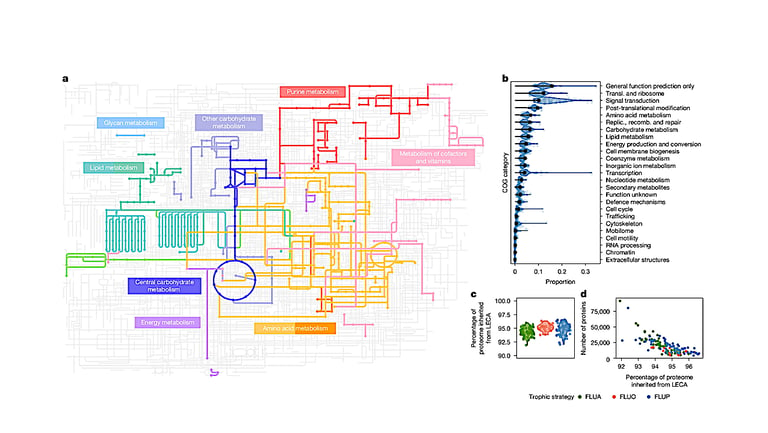


The origin of eukaryotes was not a single two-way event but a mosaic process, with mitochondria tracing back to alphaproteobacterial lineage and substantial gene input from Planctomycetota, Myxococcota, and other microbes shaping early eukaryotes.
The eukaryotic genome shows diverse sources, including Asgard archaea, Alphaproteobacteria, Planctomycetota, Myxococcota, and giant viruses, indicating a multi-source origin.
Planctomycetota likely contributed earlier than traditionally thought, with Myxococcota and the mitochondrial lineage contributing later in overlapping waves; additional minor donors included Chloroflexota and Gammaproteobacteria.
The research relied on over several years of computational work on MareNostrum supercomputers and large genomic databases, underscoring the robustness of detected evolutionary signals.
Led by Dr. Toni Gabaldón, the study used computational molecular archaeology on public genomes to reconstruct LECA and uncover diverse microbial evolutionary signals.
LECA appears highly chimeric, with broad but patchy acquisitions across metabolism and cellular processes, and expansions in signal transduction repertoires linked to trophic diversity, signaling extensive post-LECA diversification.
Findings support a model where early eukaryotes inhabited mixed microbial ecosystems, such as microbial mats, enabling gradual gene exchange and acquisition of new capabilities.
Using a reduced orthologous gene set across diverse eukaryotes, the study estimates LECA lived in an oxygen-rich environment, acquired energy by predation or scavenging, and possessed hallmark eukaryotic structures, though it lacked a full suite of cell-division regulatory genes.
broader reconstruction of LECA across diverse life forms suggests a complex ancestral cell with modern-like transport systems and an oxygenated habitat, shaped by extensive gene exchange.
These results imply that life’s origin involved long-term genetic exchanges among varied microbes, prompting revisions to the textbook view of a single endosymbiotic event driving eukaryogenesis.
Metabolic clues from donor clades point to aerobic respiration in the mitochondrial ancestor, with variable signals for other metabolisms such as fermentative trends in Asgard-like ancestors, potential photosynthetic elements, and sulfate reduction signals.
Viruses (Nucleocytoviricota) account for about 4.5% of LECA-OG phylogenies, indicating substantial viral mediation in shaping the LECA proteome.
Summary based on 4 sources
Get a daily email with more Tech stories
Sources
Ars Technica • Jun 11, 2026
The first complex cells had genes from a complex mix of species
Nature • Jun 10, 2026
Gene ancestries reveal diverse microbial associations during eukaryogenesis
Zamin.uz • Jun 14, 2026
The Origin of Life: Scientists Discover New Data on the Evolution of Complex Organisms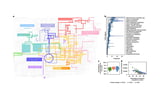
Astrobiology • Jun 13, 2026
Rethinking The Origin Of Our Cells As A Story Of Microbial Alliances