Gold, Silver and Bitcoin Sink as Tech Rout Triggers Forced Selling
November 22, 2026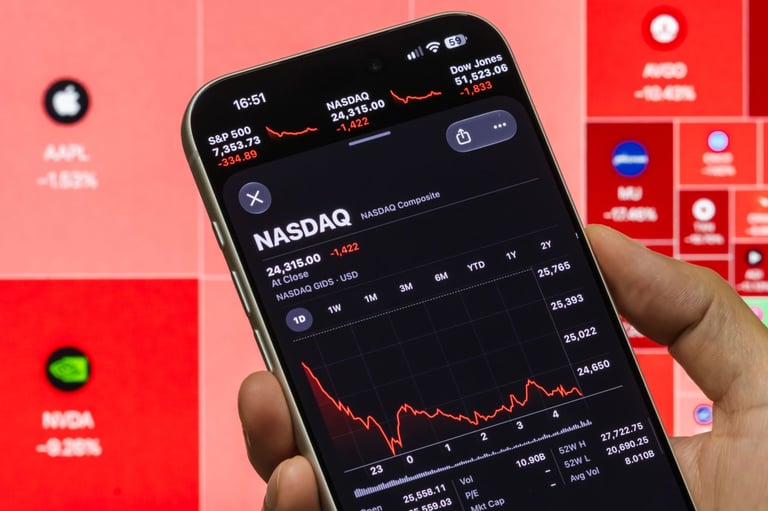

Gold briefly rebounded at the start of Asian trading on November 23 after touching a 14-month low, as investors awaited U.S. inflation data that could shape the Federal Reserve’s next move.
The recovery proved fragile: gold later fell 1.14% to $3,515.40 after reaching $3,577 intraday, while silver dropped 2.28% to $39.9832 from $41.4875.
The central force behind the sell-off has been a dash for cash, with investors unloading profitable holdings—including gold—to cover losses and meet funding needs as AI and technology shares slide.
The equity weakness has rapidly tightened U.S. financial conditions, with falling stocks accounting for more than 86% of an especially sharp one-week move.
A daily proxy for the Federal Reserve’s financial conditions index recorded one of its largest one-week tightenings since 2009; conditions remain accommodative overall, but the shift has been unusually fast.
Goldman Sachs warned that computer-driven funds could sell as much as $80.6 billion in stocks if markets keep falling, or $28.6 billion even if they rebound, while its Panic Index reached 9 out of 10.
A stronger U.S. dollar, hawkish Federal Reserve expectations and broad commodity selling are adding pressure, and UBS strategist Joni Teves said falling open interest may obscure systematic short-selling after technical levels gave way.
Technical signals remain firmly bearish: all 12 daily moving averages indicate selling, the ADX shows strong downward momentum and the MACD is negative.
Markets are treating a December 8–9 Federal Reserve rate increase as highly likely, with estimates in the supplied reports ranging from 88.6% to about 96%; traders are also weighing how long rates may stay elevated.
The October U.S. PCE inflation report is a major near-term catalyst, with a 3.8% forecast against a previous 3.6%; a higher reading could intensify selling, while a lower one could fuel a relief rally.
University of Michigan survey expectations eased, with one-year inflation expectations falling to 3.7% from 4.7% and longer-term expectations slipping to 3.3% from 3.5%, though price pressures remain elevated.
U.S. 10-year Treasury yields were near 4.9%–4.95%, close to 5%, making borrowing costlier and reducing the appeal of speculative and non-yielding assets.
Summary based on 21 sources
Get a daily email with more Financial Markets stories
Sources

Frontline • Nov 23, 2026
What is the Real Reason Behind the Gold Price Crash?
Investing.com • Nov 23, 2026
Goldman sees gold rebound after deleveraging-driven selloff

Stocktwits • Nov 22, 2026
The Great Cash Grab: Why Gold, Silver And Bitcoin Are Crashing Together